What Causes an EICR to Fail? Common Electrical Problems
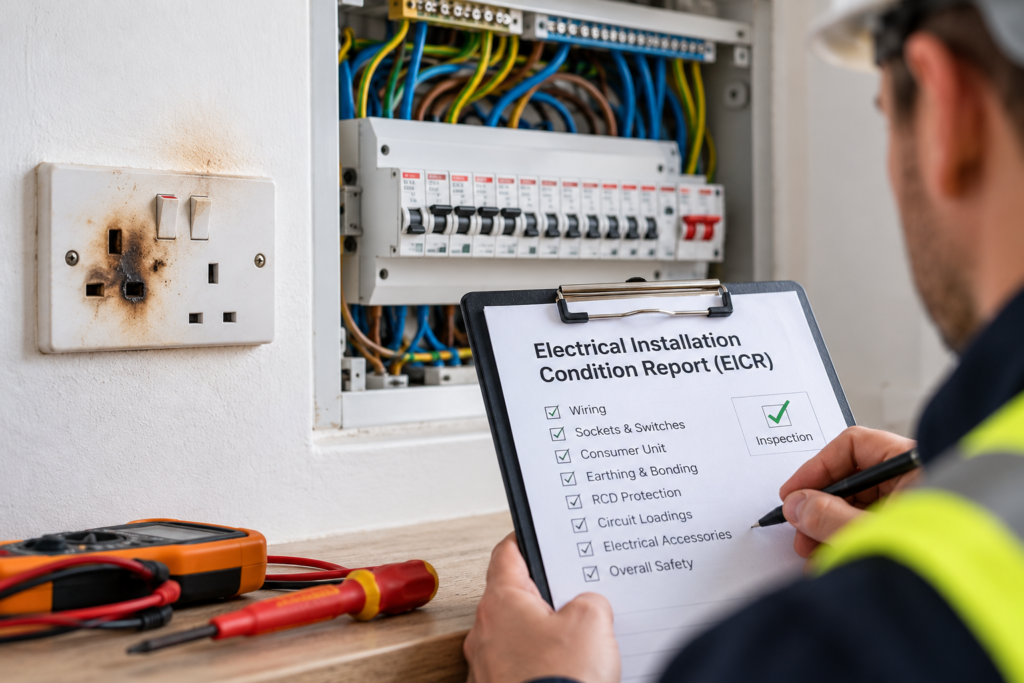
An Electrical Installation Condition Report (EICR) checks whether a property’s electrical installation is safe and in suitable condition. It covers wiring, sockets, switches, consumer units, earthing, bonding and protective devices.
Many electrical systems appear to work normally while having hidden safety issues. Understanding what causes an EICR to fail can help homeowners and landlords identify potential problems.
This guide explains common EICR faults, why they occur and what to do when problems are found.
What Causes an EICR to Fail? Common EICR Faults
One of the main things to understand about what causes an EICR to fail is that several different types of electrical defects can be identified during an inspection.
Common EICR faults include:
- Damaged electrical wiring
- Deteriorated cable insulation
- Faulty sockets and switches
- Poor earthing or bonding
- Inadequate RCD protection
- Overloaded circuits
- Damaged electrical components
- Unsafe DIY alterations
- Incorrectly installed wiring
- Signs of overheating or burning
- Outdated electrical equipment
Not every fault makes an installation unsatisfactory. The electrician assesses each defect based on its condition and risk before assigning a classification.
A minor issue may not require immediate action, while a serious safety defect may need urgent attention. Therefore, what causes an EICR to fail depends on the severity of the faults, not simply their number.
Faulty Electrical Wiring and Damaged Cable Insulation
Faulty electrical wiring is a common concern during an EICR. Wiring can deteriorate because of age, heat, moisture, physical damage or previous electrical work.
An electrician may identify:
- Cracked or damaged insulation
- Exposed conductors
- Loose connections
- Damaged cables
- Poor cable routing
- Signs of overheating
- Incorrectly altered circuits
Damaged insulation can expose conductors to risk, increasing the chance of electric shock, short circuits or other faults.
Wiring is checked through visual inspection and electrical testing, as some problems may not be immediately visible. Where defects are found, the required repair depends on their extent. Minor damage may need local repair, while widespread deterioration may require more extensive work.
This is one factor to consider when assessing what causes an EICR to fail. Old wiring does not automatically mean a full house rewire is required.
What Electrical Defects Can Lead to an Unsatisfactory EICR?
When considering what causes an EICR to fail, it helps to look at the main reasons an electrician may record an unsatisfactory finding.
Unsafe electrical protection
Protective measures such as electrical safety systems, earthing, bonding and suitable circuit protection are important parts of an electrical installation.
Damaged wiring
Wiring that is damaged, exposed or significantly deteriorated may require attention.
Faulty accessories
Sockets, switches and other electrical accessories can become damaged or develop unsafe connections.
Poor previous alterations
Electrical installations are often modified over many years. Poorly completed additions can create faults within otherwise older installations.
Overloaded circuits
Circuits should be suitable for the electrical load placed upon them. Excessive demand can create safety concerns.
Inadequate protection
Older installations may lack suitable protective measures. These are common reasons for EICR failure, but each property must be assessed individually.
Electrical Faults Found During an EICR Inspection
Understanding what causes an EICR to fail also means understanding what an electrician actually checks.
During an EICR inspection, attention may be given to:
- Consumer units
- Distribution boards
- Socket outlets
- Switches
- Lighting circuits
- Cable condition
- Earthing arrangements
- Bonding
- Circuit protection
- RCD protection
- Connections and accessories
- Visible signs of damage
The inspection uses electrical testing to identify faults that may not be visible. A socket or light may still work despite an underlying safety issue. This is why what causes an EICR to fail depends on proper inspection and testing, not just whether equipment works.
Outdated Electrical Installations and Consumer Units
Older installations may contain outdated wiring, accessories or protective equipment, especially where electrical systems have been altered over time. An old installation does not automatically fail an EICR; its condition, safety and suitability are what matter.
If the consumer unit no longer provides suitable protection, an upgrade or replacement may be recommended. This is why what causes an EICR to fail depends on the installation’s actual condition, not simply its age.
Faulty Sockets, Switches and Electrical Accessories
Faulty sockets and switches are another area that can contribute to an unsatisfactory EICR.
Electrical accessories are used every day and can become damaged through normal use, impact, overheating or poor installation.
Warning signs can include:
- Cracked socket covers
- Loose switches
- Burn marks
- Discolouration
- Damaged faceplates
- Loose connections
- Unusual heat
- Buzzing or unusual sounds
A damaged socket should not be ignored if it still works. Burning or discolouration may indicate overheating and needs investigation. Replacing the socket may be enough, but underlying circuit faults may also need attention. This can be a sign of what causes an EICR to fail.
Overloaded Circuits and Other Electrical Problems That Fail an EICR
Overloaded circuits can become a concern when too much electrical demand is placed on a circuit.
Modern properties often use considerably more electrical equipment than they did when older installations were originally designed.
Examples can include:
- Portable heaters
- Kitchen appliances
- Electric heating equipment
- Multiple high-power appliances
- Home office equipment
- Numerous devices connected to one circuit
An overloaded circuit can put extra stress on cables and components, increasing heat and safety risks.
Other electrical problems that fail an EICR include poor connections, damaged protective devices and unsuitable alterations. However, several appliances do not automatically mean a circuit is overloaded; the electrician must assess the circuit and its electrical demand.
Poor Earthing, Bonding and Inadequate RCD Protection
Earthing and bonding are important safety measures within an electrical installation.
If there is a fault, effective earthing can help protective devices operate correctly. Bonding also helps reduce dangerous potential differences between conductive parts.
Problems may include:
- Poor earthing arrangements
- Missing bonding
- Damaged conductors
- Poor connections
- Continuity problems
- Inadequate protective measures
RCD protection is important because it can disconnect a circuit when it detects current leakage. The required protection depends on the installation and circuits, so an electrician should assess whether existing protection is suitable. This is an important factor in what causes an EICR to fail, especially in older installations.
DIY Electrical Work and Non-Compliant Installations
DIY electrical work can create problems when circuits or accessories have been changed without appropriate knowledge, testing or consideration of the existing installation.
Examples may include:
- Incorrectly installed sockets
- Poorly connected cables
- Incorrect cable sizes
- Unsafe junctions
- Improper lighting alterations
- Unprotected electrical connections
- Incorrect circuit modifications
The concern is whether the electrical work is safe and suitable, regardless of who completed it. Previous alterations by homeowners or contractors can create hidden faults, particularly in older or renovated properties. These issues may affect an otherwise working circuit and contribute to what causes an EICR to fail.
10. What Happens After Electrical Faults Are Found on an EICR?
The electrician records the faults in the EICR and explains their significance. Serious classifications may require corrective action, while observations may simply highlight areas for improvement or further investigation.
After receiving the report, you should:
- Read through the findings carefully.
- Ask the electrician to explain anything unclear.
- Identify which defects require corrective work.
- Obtain a clear description of the recommended repairs.
- Arrange appropriate remedial work where necessary.
- Complete any required follow-up inspection or testing.
An unsatisfactory EICR does not automatically mean the entire property needs rewiring.
For example, a property may only need a damaged accessory replaced, a circuit fault corrected or a particular protective measure improved.
More extensive work may be recommended where problems are widespread.
The important thing is to understand the actual findings rather than assuming that an entire installation needs replacing.
Can an EICR Fail Because of One Fault?
Yes, a single serious electrical defect can contribute to an unsatisfactory result.
The number of faults is not the only consideration. The nature and potential risk of the defect are important.
For example, one significant safety issue can be more important than several minor observations.
This is why you should not judge an EICR simply by counting the number of items listed on the report.
If a serious problem is identified, ask the electrician to explain:
- What the fault is
- Where it is located
- Why it is a concern
- What repair is required
- Whether further testing is needed
This gives you a much clearer understanding of the condition of the installation.
Does an Old House Automatically Fail an EICR?
No. An old house does not automatically fail an EICR simply because of its age.
Older properties may have outdated electrical installations, but the inspection assesses the actual condition and safety of the installation.
However, older wiring can be more likely to show deterioration or contain older electrical components.
If an inspection identifies widespread problems, more extensive electrical work may be recommended. In some cases, individual repairs or upgrades may be sufficient.
Internal link opportunity: Old House Rewire Manchester
Does an EICR Failure Mean You Need a Full Rewire?
No. An unsatisfactory EICR does not automatically mean that the whole property requires rewiring.
The required work depends on the defects identified.
A property could have a localised problem with a socket, switch, circuit, connection or protective device. These issues may be dealt with through targeted remedial work.
A full rewire may become relevant when the electrical installation has widespread deterioration, extensive faults or other issues that cannot reasonably be resolved through limited repairs.
The best approach is to ask for a clear explanation of the findings before agreeing to major work.
How Can You Reduce the Risk of EICR Problems?
There is no way to guarantee a satisfactory EICR because faults can develop naturally over time.
However, good electrical maintenance can help identify problems earlier.
You can:
- Replace damaged sockets and switches
- Investigate repeated circuit tripping
- Avoid overloading electrical circuits
- Never ignore burning smells
- Address visible wiring damage
- Avoid unsafe DIY electrical work
- Keep records of electrical alterations
- Arrange appropriate electrical inspections
- Deal with known electrical problems promptly
FAQs
Common causes include damaged wiring, poor earthing or bonding, inadequate RCD protection, faulty accessories, overloaded circuits, unsafe alterations and damaged electrical components. The electrician assesses each fault based on its condition and potential risk.
Yes. A single serious defect can result in an unsatisfactory EICR. The severity and potential risk of the fault are more important than the total number of issues found.
No. Old wiring does not automatically make an EICR unsatisfactory. The electrician considers its condition, safety, suitability and any signs of deterioration or previous alterations.
Common EICR faults include damaged cable insulation, faulty sockets and switches, poor connections, inadequate protection, earthing issues, overloaded circuits and unsafe electrical alterations.
It can, particularly if there are signs of overheating, burning, loose connections or other safety concerns. The electrician will assess whether the socket or the wider circuit needs attention.
Not necessarily. Some problems can be resolved through individual repairs or replacement of specific components. A full rewire may only be considered where faults are widespread or cannot reasonably be corrected through smaller repairs.
The electrician will identify the relevant defects and explain what remedial work or further investigation is required. The necessary work depends on the faults found and their level of risk.
Yes, if previous DIY or other electrical alterations are unsafe, incorrectly installed or unsuitable for the installation. The assessment focuses on the condition and safety of the work rather than simply who carried it out.
Keep electrical accessories in good condition, avoid overloading circuits, address visible damage promptly and use competent electricians for electrical work. Regular inspection and maintenance can also help identify issues earlier.
No. NAPIT registration does not guarantee a satisfactory result, as the EICR outcome depends on the actual condition of the electrical installation. NAPIT recognises EICR work within its electrical schemes, including domestic, commercial and industrial EICR activities.
For more information about NAPIT’s electrical schemes and EICR scope, see NAPIT Electrical Membership & Schemes.
Leave a Reply