Introduction
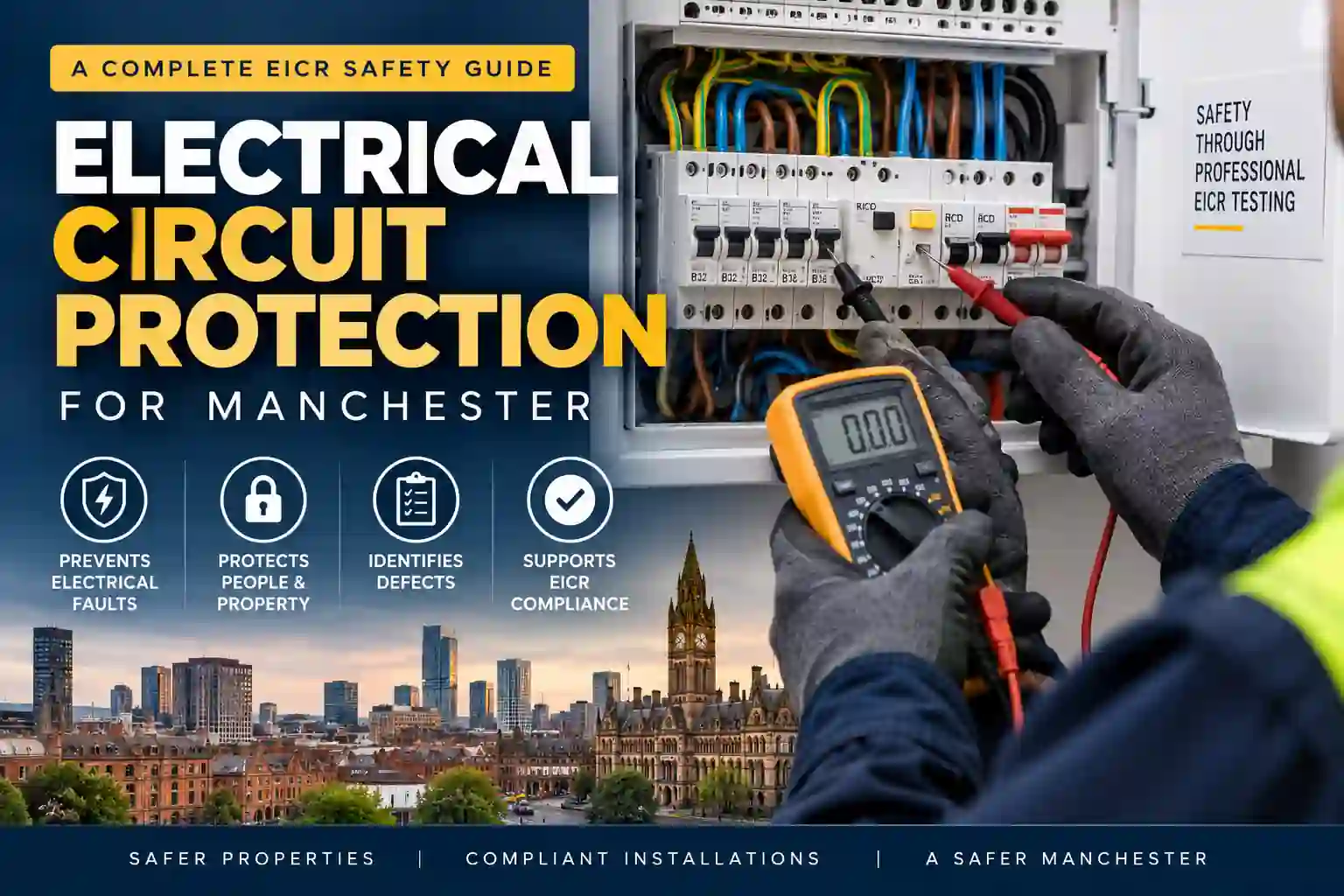
Electrical Circuit Protection helps protect electrical installations from overloads, short circuits and other faults. During an EICR, circuits and protective devices are inspected and tested to identify defects or deterioration. For homeowners, landlords and businesses, Electrical Circuit Protection Manchester inspections can provide a clearer understanding of an installation’s condition and safety.
What Is Electrical Circuit Protection?
Electrical circuit protection refers to equipment designed to protect electrical circuits when certain abnormal electrical conditions occur.
Common protective devices include:
- MCBs
- RCDs
- RCBOs
- Fuses
- Circuit breakers
- Protective equipment within consumer units and distribution boards
Different devices provide different forms of protection. Overcurrent protective devices can protect circuits against overload and short-circuit conditions, while RCDs provide additional protection against certain earth-leakage conditions.
The presence of a protective device alone does not confirm that an installation is safe. Its condition, suitability, operation and relationship with the circuit also need to be considered.
Why Is Electrical Circuit Protection Important?
Effective circuit protection helps reduce risks associated with:
- Electrical overloads
- Short circuits
- Fault currents
- Damaged wiring
- Insulation deterioration
- Earth faults
- Faulty electrical equipment
A protective device that repeatedly operates can indicate an underlying problem.
For example, continually resetting a circuit breaker without investigating why it is operating does not resolve the cause of the fault.
Electrical Circuit Protection Manchester
Electrical installations throughout Manchester can differ considerably depending on the property’s age, size, use and previous electrical alterations.
A domestic property may have separate circuits for lighting, sockets, cooking and other fixed appliances. Commercial premises can have more complex systems involving multiple distribution boards, three-phase supplies and higher electrical loads.
An EICR can assess relevant circuits and protective equipment as part of the wider electrical installation.
For a complete inspection and testing service, see our EICR Testing & Certification Manchester service.
Electrical Circuit Testing During an EICR
Electrical Circuit Testing is an important part of an EICR because visual inspection alone cannot identify every electrical condition.
Depending on the installation and inspection requirements, testing may involve:
- Continuity
- Insulation resistance
- Polarity
- Protective conductors
- Fault protection
- Circuit characteristics
- Protective device operation
Test results are considered together with visual inspection findings to form an overall assessment of the electrical installation.
Our EICR Inspection Manchester service covers inspection and testing of relevant parts of domestic and commercial electrical installations.
Electrical Testing and Compliance for Commercial Properties
Commercial properties may require broader electrical testing and compliance work because their installations can include multiple distribution boards, fixed equipment, larger electrical loads and specialist systems.
Electrical testing can help businesses identify deterioration, faults and other conditions requiring attention as part of ongoing electrical safety management.
For additional information about commercial electrical testing and compliance, see our Electrical Testing & Compliance resource.
Electrical Circuit Inspection
An Electrical Circuit Inspection focuses on the condition of accessible electrical components and the visible aspects of relevant circuits.
An electrician may assess:
- Wiring condition
- Connections
- Consumer units
- Distribution boards
- Socket outlets
- Switches
- Protective devices
- Earthing and bonding
- Signs of overheating or damage
This inspection helps identify visible defects and conditions that may require further testing or investigation.
An EICR combines this inspection process with appropriate electrical testing to provide a broader assessment of the fixed installation.
Common Electrical Circuit Faults
Electrical circuit faults can develop because of age, deterioration, physical damage, overloading, poor connections or unsuitable alterations.
Overloaded Circuits
A circuit carrying excessive electrical load may cause protective devices to operate and can contribute to overheating.
Damaged Wiring
Damaged, deteriorated or incorrectly installed wiring can affect the safe operation of a circuit.
Insulation Problems
Poor insulation resistance may indicate deterioration or another electrical condition requiring further assessment.
Loose Connections
Loose connections can increase resistance and potentially contribute to overheating or intermittent electrical problems.
Incorrect Protection
Protective devices need to be suitable for the circuit and installation. If protection is inappropriate, further assessment may be required rather than simply replacing the device.
Electrical Circuit Safety and Consumer Units
The consumer unit is an important part of an electrical installation because it contains protective devices serving individual circuits.
During an inspection, an electrician may assess:
- MCBs
- RCDs
- RCBOs
- Main switch
- Connections
- Labelling
- Enclosure condition
- Earthing arrangements
- Signs of overheating or damage
The consumer unit should be assessed as part of the complete electrical installation rather than considered separately.
Need an EICR in Manchester?
Concerned about circuit protection, repeated tripping or electrical defects? Our professional EICR inspections in Manchester assess the condition of fixed electrical installations and provide a clear report of any issues identified.
[Book Your EICR Inspection] Call 07405 431 800
Electrical Circuit Problems That Cause Tripping
Repeated circuit tripping can indicate an underlying electrical problem.
Possible causes include:
- Excessive circuit load
- Faulty appliances
- Damaged wiring
- Earth leakage
- Short circuits
- Faulty protective devices
- Deteriorated electrical components
If a circuit repeatedly trips, the underlying cause should be investigated instead of continually resetting the protective device.
For businesses that need wider electrical installation services, our Commercial Electrical Services page provides additional information about commercial electrical systems and related work.
EICR Electrical Circuits: What Does an Inspection Check?
EICR Electrical Circuits are assessed as part of the wider fixed electrical installation.
Depending on the installation, the inspection and testing process can consider:
- Wiring and accessories
- Consumer units or distribution boards
- Circuit protection
- Earthing and bonding
- Circuit test results
- Visible damage or deterioration
- Electrical defects
- Safety observations
The purpose is not simply to check whether a circuit works. The condition of relevant components and the safety of the installation are considered together.
Electrical Circuit Defects and EICR Codes
When an EICR identifies an electrical issue, the electrician records the appropriate observation classification based on the condition found.
Common classifications include:
- C1 — Danger Present
- C2 — Potentially Dangerous
- C3 — Improvement Recommended
- FI — Further Investigation
The classification depends on the specific condition identified during the inspection.
NAPIT’s EICR documentation also uses these observation codes, with C1, C2, C3 and FI indicating different levels or types of action associated with observations.
For more information about common EICR issues, see our Commercial EICR Problems Manchester guide.
What Happens If Electrical Circuit Defects Are Found?
An electrical defect does not automatically mean that the complete installation needs rewiring.
The appropriate action depends on:
- The type of defect
- Its severity
- The affected circuit
- The condition of surrounding equipment
- Inspection and testing results
- Applicable requirements
Some problems may require repair or component replacement, while others may require further investigation.
Where remedial work is required, the relevant work should be completed and appropriately tested.
Our EICR Remedial Works Manchester service provides information about addressing defects identified during EICR inspections.
Electrical Circuit Safety for Commercial Properties
Commercial electrical circuits can be more complex than domestic installations.
Businesses may have:
- Multiple distribution boards
- Three-phase supplies
- Large electrical loads
- Fixed equipment
- Emergency systems
- Specialist machinery
- Numerous final circuits
Regular inspection and testing can help identify deterioration, defects and other electrical conditions requiring attention.
For commercial electrical inspection requirements, see our Commercial EICR Services Manchester page.
Fixed Wiring and Electrical Circuit Inspection
Fixed wiring forms an important part of an electrical installation and can include cables, accessories, distribution equipment and fixed circuits.
For commercial and other applicable premises, fixed wire testing can help assess the condition of the fixed electrical installation and identify issues requiring attention.
You can learn more about this process on our Fixed Wire Testing Manchester page.
When Should Electrical Circuits Be Inspected?
The appropriate inspection interval depends on the property, installation, use and relevant requirements.
An inspection may also be appropriate when:
- Buying a property
- Renting out a property
- Carrying out major electrical alterations
- Electrical problems repeatedly occur
- The installation is older
- There are concerns about electrical safety
- A previous inspection identified defects
For privately rented properties in England, electrical installations must be inspected and tested by a suitably qualified and competent person at least every five years.
For other properties, the appropriate inspection frequency can depend on the installation and its use.
How Can You Reduce Electrical Circuit Problems?
Good electrical maintenance can help identify problems before they become more serious.
Useful measures include:
- Avoid overloading circuits
- Investigate repeated tripping
- Do not ignore burning smells or overheating
- Arrange professional inspection when concerns arise
- Keep electrical equipment properly maintained
- Use qualified professionals for significant electrical work
- Arrange appropriate periodic inspection and testing
Electrical circuit safety should be treated as an ongoing part of property maintenance rather than something considered only after a fault occurs.
NAPIT and EICR Inspections
Is NAPIT relevant to EICR inspections?
Yes. NAPIT operates an Electrical Inspector Scheme that includes Electrical Installation Condition Reporting (EICR) work for domestic, industrial and commercial installations. NAPIT’s current application information specifically lists EICR work within its electrical schemes.
When choosing an EICR provider, customers can check the contractor’s relevant registration and qualifications rather than relying solely on a general accreditation statement.
For official information, visit NAPIT’s electrical schemes and EICR information.
Conclusion
Electrical Circuit Protection is an important part of maintaining a safe and functional electrical installation. Protective devices, wiring, earthing, connections and circuit condition all need to be considered together.
An EICR provides a structured inspection and testing process that can identify electrical defects and record observations requiring attention.
For homeowners, landlords and businesses in Manchester, professional EICR testing can provide a clearer picture of the condition of the fixed electrical installation and help identify appropriate next steps.
Book Your EICR Inspection in Manchester
If you are a homeowner, landlord or business owner and need your electrical installation checked, arrange a professional EICR inspection.
Get a clear electrical report and understand the condition of your installation. [Book Your EICR Inspection] | Call 07405 431 800
FAQs
What is Electrical Circuit Protection?
Electrical Circuit Protection uses devices such as MCBs, RCDs and RCBOs to help protect electrical circuits against specified faults and abnormal electrical conditions.
What does an EICR check on electrical circuits?
An EICR can assess relevant wiring, protective devices, connections, earthing, bonding and circuit testing results as part of the overall electrical installation assessment.
Why does my circuit breaker keep tripping?
Repeated tripping can be associated with overloads, faulty appliances, short circuits, earth leakage, damaged wiring or other electrical faults. The underlying cause should be investigated.
Can an EICR identify electrical circuit faults?
Yes. Inspection and testing can identify certain defects and conditions affecting the safety and condition of an electrical installation.
Do electrical circuit defects always require rewiring?
No. The required action depends on the particular defect and condition of the installation. Some issues may require repair, component replacement or further investigation rather than complete rewiring.
Do you provide EICR inspections in Manchester?
Yes. EICR inspections are available for domestic and commercial properties in Manchester and surrounding areas.
Leave a Reply