What Does an EICR Actually Check? A Property Owner’s Guide
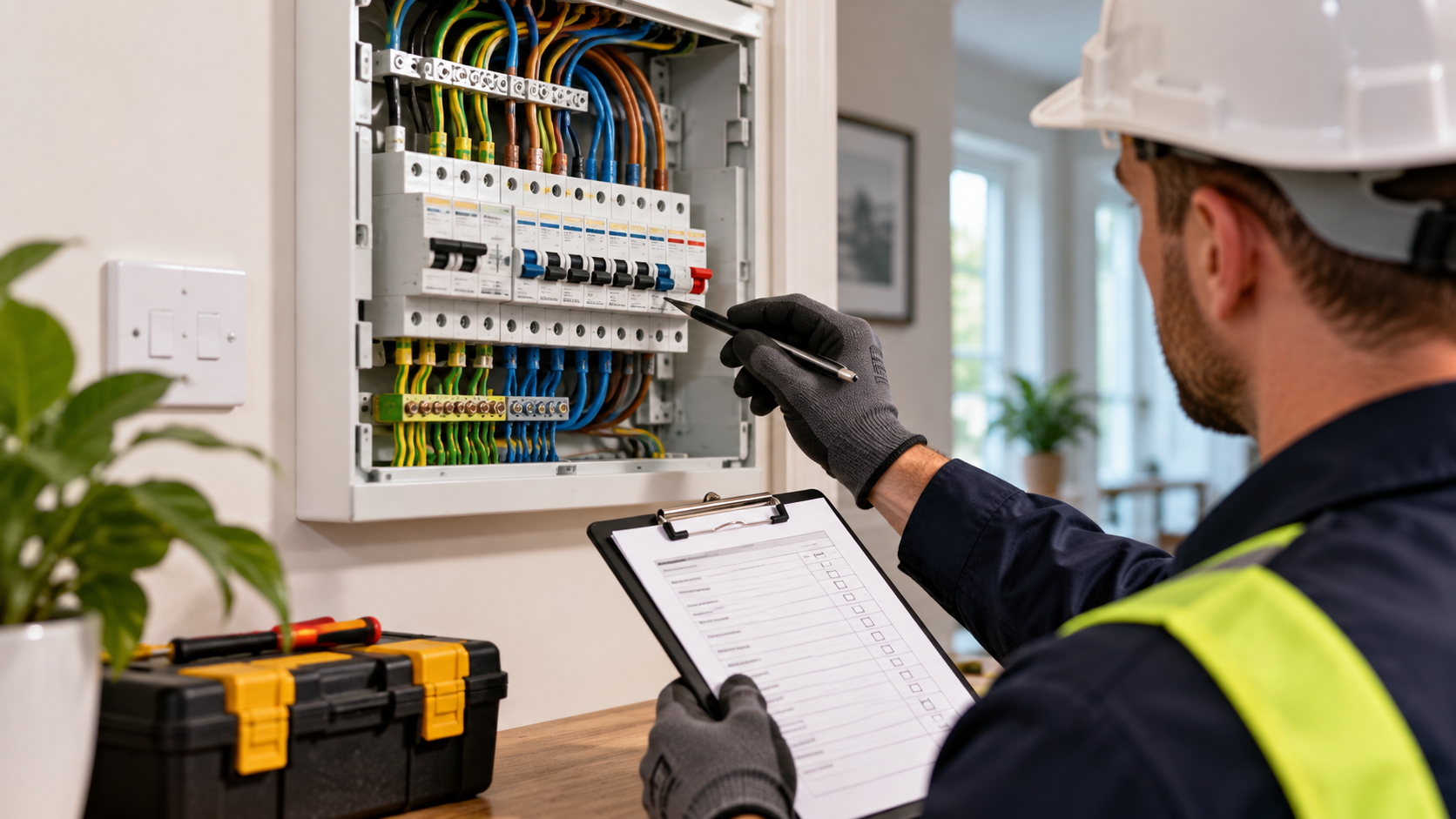
An EICR examines the condition and safety of a property’s fixed electrical installation, including wiring, sockets, consumer units, protective devices, earthing and bonding. Electrical testing can also identify hidden faults. Understanding what does an EICR check helps property owners know what the inspection covers and what the final report may reveal.
What Does an EICR Check?
Understanding what does an EICR check can help property owners know what the inspection involves.
The inspection can cover:
- Wiring and cable condition
- Socket outlets and switches
- Consumer units and distribution boards
- Circuit protection
- Earthing and bonding
- RCD protection
- Connections and accessories
- Signs of damage or deterioration
- Previous electrical alterations
- Other relevant parts of the installation
The exact scope depends on the property and its electrical installation. The electrician assesses the installation as a whole rather than checking only one component.
What Is Checked During an EICR?
When considering what is checked during an EICR, it is useful to separate the inspection into different parts of the electrical installation.
The electrician may examine visible components first and then carry out appropriate tests on relevant circuits and equipment.
The condition, suitability and safety of the installation are considered throughout the inspection.
This means an installation can look tidy and still have issues that require further investigation or remedial work.
Electrical Wiring and Cable Condition
Knowing what does an EICR check helps explain why both visible wiring and electrical testing are important.
The electrician may look for signs of:
- Damaged cable insulation
- Exposed conductors
- Loose connections
- Deterioration
- Poor cable routing
- Signs of overheating
- Unsuitable alterations
- Physical damage
An electrical wiring inspection can identify visible problems, while testing may reveal faults that cannot be seen.
Older cables are not automatically considered unsafe simply because of their age. Their actual condition and suitability for the installation are more important.
Where significant wiring defects are identified, the electrician can explain what needs to be repaired or investigated.
Are Sockets and Switches Checked?
Yes. Sockets, switches and other electrical accessories can form an important part of the inspection.
The electrician may look for:
- Cracks or damage
- Loose accessories
- Burning or discolouration
- Signs of overheating
- Poor connections
- Other visible defects
A socket can continue to supply power while having an underlying problem. This is why electrical safety checks should not be based simply on whether an accessory appears to work.
If a damaged accessory is identified, the required action will depend on the nature of the defect and its effect on the installation.
Internal link opportunity:
Use Socket and Switch Installation Manchester as an internal link where the article discusses replacement or accessory problems.
Is the Consumer Unit Checked?
The consumer unit is another important part of an EICR.
It contains protective devices that help protect electrical circuits against certain faults. The electrician will consider its condition, connections, protective devices and suitability for the installation.
Depending on the property, the inspection may identify:
- Damaged equipment
- Poor connections
- Unsuitable protective devices
- Missing or inadequate protection
- Other concerns affecting electrical safety
An older consumer unit does not automatically mean that it must be replaced. The electrician assesses whether it provides suitable protection for the installation.
Internal link opportunity:
Consumer Unit Replacement Manchester can be linked where consumer unit upgrades or replacement are discussed.
Does an EICR Check Earthing and Bonding?
Yes. Earthing and bonding are important electrical installation checks because they form part of the safety arrangements within an electrical system.
The electrician may assess the condition and continuity of relevant earthing and bonding arrangements.
Potential concerns can include:
- Poor connections
- Damaged conductors
- Missing bonding
- Inadequate earthing arrangements
- Continuity problems
These checks help determine whether the installation has appropriate protective arrangements.
The electrician will consider the requirements applicable to the particular installation rather than assuming that every property should have exactly the same arrangement.
Is RCD Protection Checked?
RCD protection is also considered during an EICR where relevant.
An RCD can disconnect a circuit when it detects certain types of current leakage, providing an additional level of protection.
During EICR testing, the electrician may assess the operation and suitability of relevant RCD protection.
The presence of an RCD alone does not necessarily mean the installation is fully protected. Its type, condition, operation and application need to be considered alongside the rest of the installation.
This is particularly relevant when inspecting older properties that may have been altered or upgraded over time.
Are Electrical Circuits Tested?
Yes. Testing forms an important part of what does an EICR check because some electrical faults cannot be identified through visual inspection alone.
Depending on the installation, testing can assess matters such as:
- Continuity
- Insulation resistance
- Polarity
- Earthing arrangements
- Protective conductor continuity
- RCD operation
- Circuit condition
The electrician selects appropriate tests based on the installation and circumstances.
Testing helps provide a clearer picture of the electrical system and can identify problems that may otherwise remain unnoticed.
Does an EICR Check for Overloaded Circuits?
An EICR can identify concerns associated with circuit loading and the suitability of the installation for its intended use.
Modern homes often use more electrical equipment than older properties were originally designed to accommodate. However, having several appliances connected to one circuit does not automatically mean that the circuit is overloaded.
The electrician considers the circuit design, protective devices, cable characteristics and electrical demand before reaching a conclusion.
This is one reason EICR inspection requirements cannot be reduced to a simple visual check.
Internal link opportunity:
Link Overloaded Electrical Circuits Manchester where you explain circuit loading and electrical demand in more detail.
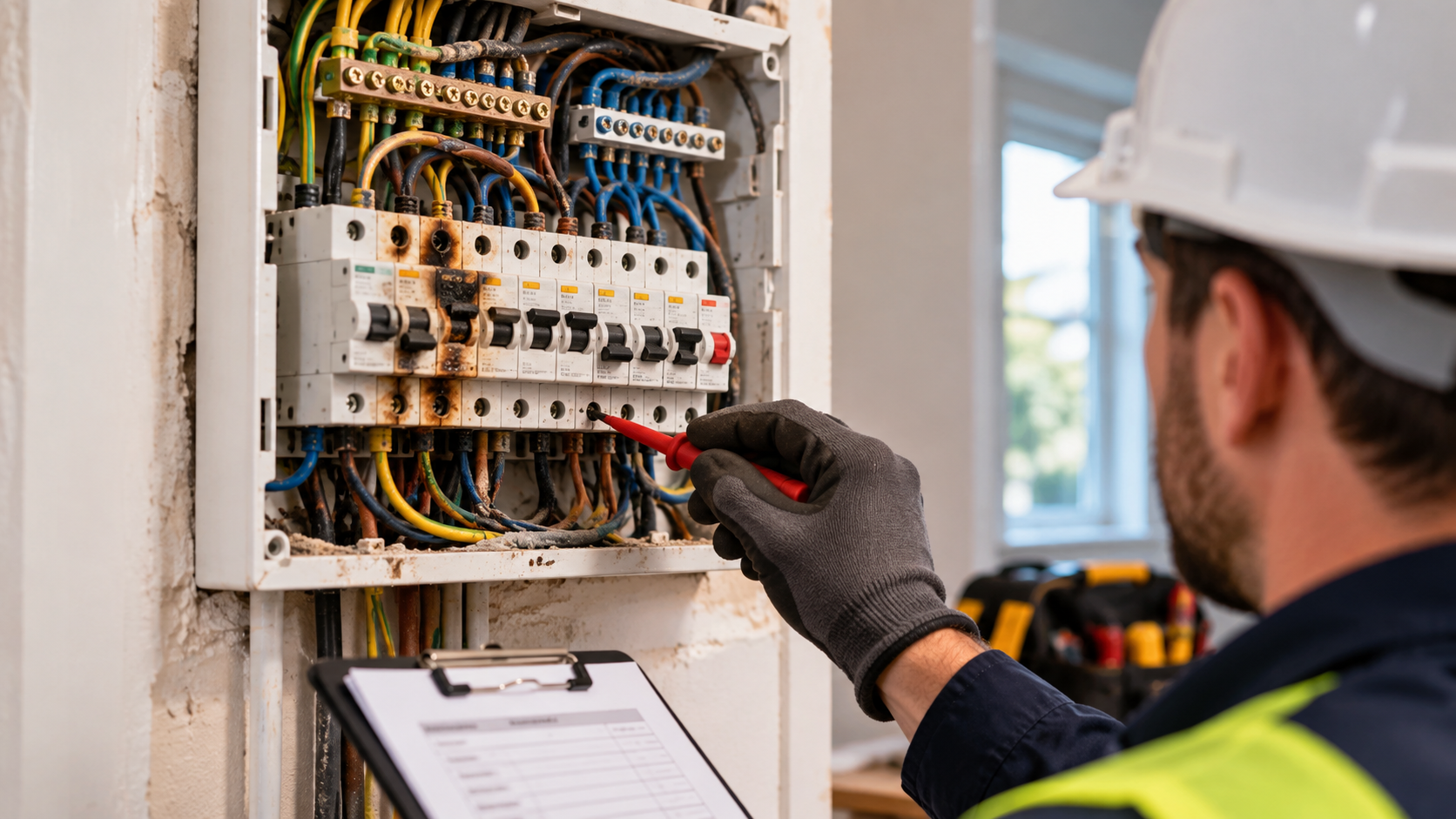
Are Signs of Overheating or Burning Checked?
Visible signs of overheating can indicate that something within the electrical installation requires attention.
During an inspection, an electrician may identify:
- Burn marks
- Discolouration
- Melted components
- Heat damage
- Damaged insulation
- Signs of previous overheating
These signs may be found around sockets, switches, consumer units, connections or other electrical equipment.
The visible damage may not be the actual cause of the problem. Further investigation can sometimes be needed to determine why overheating occurred.
Are Previous Electrical Alterations Checked?
Many properties have been modified several times. New sockets, lighting, extensions and other electrical changes may have been added by previous owners or contractors.
An EICR can identify concerns associated with these alterations where they are accessible and relevant to the inspection.
Examples can include:
- Poorly connected cables
- Unsuitable additions
- Incorrect circuit modifications
- Inadequate protection
- Poorly installed accessories
The important point is not simply who completed the work. The electrician assesses whether the resulting installation is safe and suitable.
This can be particularly important in older properties where the electrical installation has changed considerably over the years.
What Electrical Safety Checks Are Carried Out?
The specific electrical safety checks carried out depend on the installation, but the overall aim is to assess whether the electrical system remains safe for continued use.
The electrician may consider:
Condition
Are the electrical components showing damage or deterioration?
Protection
Are suitable protective measures provided for the circuits?
Connections
Are relevant electrical connections secure and in suitable condition?
Earthing and bonding
Are the relevant arrangements satisfactory?
Testing results
Do the appropriate tests identify any electrical defects?
Suitability
Is the installation suitable for its present use?
Looking at these areas together gives a more useful assessment than simply checking whether electricity is available.
What Problems Can an EICR Reveal?
Understanding what does an EICR check also means understanding the types of problems it may identify.
Possible findings include:
- Damaged wiring
- Poor connections
- Faulty accessories
- Inadequate earthing
- Bonding issues
- Problems with protective devices
- Unsuitable alterations
- Circuit defects
- RCD-related concerns
- Signs of overheating
- Deteriorated electrical components
Not every observation means the installation is unsafe. The electrician classifies relevant findings according to their significance and potential risk.
For example, a serious defect may require prompt remedial action, while an improvement recommendation may not require immediate repair.
What Do EICR Report Findings Mean?
The EICR report findings provide a record of observations and test results from the inspection.
Electrical observations can be given different classification codes depending on their significance.
Common classifications include:
- C1: Danger is present and immediate action is required.
- C2: A potentially dangerous condition has been identified.
- C3: Improvement is recommended.
- FI: Further investigation is required.
The report should make it possible to understand what has been identified and where further action may be necessary.
If you receive an unsatisfactory report, do not assume that the entire electrical installation needs replacing. The required work depends on the actual findings.
Internal link opportunity:
Use EICR Codes Explained as an internal link when discussing classification codes and report findings.
Does an EICR Check Every Electrical Appliance?
No. An EICR focuses primarily on the fixed electrical installation rather than testing every portable appliance in a property.
For example, the inspection can concern fixed wiring, sockets, switches, lighting circuits, consumer units and protective arrangements.
Portable appliances are generally dealt with through separate forms of inspection and testing where appropriate.
This distinction is useful for property owners because an EICR and portable appliance testing have different purposes.
Does an EICR Check Hidden Wiring?
An electrician cannot normally inspect every section of concealed wiring without opening walls, floors or other building structures.
The inspection therefore focuses on accessible parts and uses appropriate electrical testing to assess the installation.
If the electrician identifies an indication of a concealed problem, further investigation may be recommended.
This means a standard EICR should not be viewed as an invasive survey of every cable inside a building.
What Happens If an EICR Finds a Problem?
If an issue is identified, the electrician records the relevant observation and classification in the report.
You should then review the findings and ask for an explanation if anything is unclear.
Depending on the problem, the recommended action could involve:
- Repairing damaged wiring
- Replacing an electrical accessory
- Correcting an unsafe connection
- Improving protective measures
- Carrying out further investigation
- Replacing unsuitable equipment
The appropriate solution depends on the individual defect.
An unsatisfactory EICR does not automatically mean that extensive electrical work is required.
How Should Property Owners Prepare for an EICR?
You do not normally need to make major changes before an inspection. However, providing reasonable access to electrical equipment can make the inspection easier.
Before the appointment, consider:
- Clearing access around the consumer unit
- Making accessible areas available
- Informing the electrician about known electrical problems
- Mentioning recent electrical alterations
- Providing details of previous electrical work where available
- Making sure relevant rooms can be accessed
If you already know about a damaged socket, repeated tripping or another electrical issue, tell the electrician before testing begins.
Why Proper EICR Testing Matters
A visual inspection can identify obvious defects, but electrical testing can provide additional information about the condition of the installation.
This is another important part of understanding what does an EICR check during an inspection.
A property may have working lights and sockets while still having problems with wiring, connections, protective devices or other parts of the installation.
Professional inspection and testing can help identify these issues and provide a clearer understanding of the property’s electrical condition.
So, what does an EICR check in practical terms?
So, what does an EICR check in practical terms?
It assesses the relevant parts of the fixed electrical installation to identify defects, deterioration and safety concerns. This can include wiring, accessories, circuits, consumer units, earthing, bonding, RCD protection and other protective measures.
The electrician combines visual inspection with appropriate testing to assess the installation.
For property owners, the most important point is that an EICR is about the condition and safety of the electrical installation, not simply whether everything appears to work.
Understanding the inspection can make the report easier to read and help you decide what action, if any, is required.
FAQs
An EICR checks relevant parts of the fixed electrical installation, including wiring, sockets, switches, lighting circuits, consumer units, earthing, bonding and protective devices.
Yes. Accessible sockets, switches and other electrical accessories can be visually inspected for damage, deterioration, overheating and other defects.
Yes. Appropriate electrical testing forms part of an EICR and can help identify faults that may not be visible during the inspection.
Yes. The consumer unit and relevant protective devices are assessed as part of the inspection.
Yes. Accessible wiring is inspected, and appropriate testing can help identify electrical faults that may not be obvious from a visual inspection.
No. Age alone does not automatically make an installation unsatisfactory. Its condition, safety and suitability are assessed.
The electrician records relevant findings in the report and assigns appropriate classifications. Remedial work or further investigation may be recommended depending on the issue.
An EICR primarily assesses the fixed electrical installation. Portable appliances are generally covered by separate inspection and testing arrangements.
Some concealed faults may not be directly visible, but appropriate electrical testing can identify certain underlying problems. Further investigation may be recommended where necessary.
Review the observations and classification codes in the report. If anything is unclear, ask the electrician to explain the finding, its significance and any recommended action.
Yes. A NAPIT-approved electrician is assessed against relevant competency and technical requirements. When choosing an electrician for an EICR, it is sensible to check their NAPIT registration, qualifications and experience to ensure they are competent to carry out the required inspection and testing.